
Building Data Center Infrastructure: What Trade Contractors Need to Know
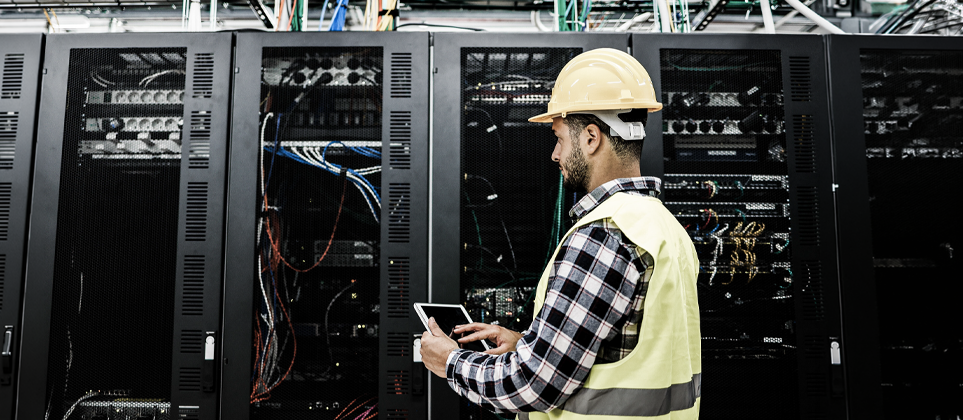

Data center infrastructure projects create unique financial and operational challenges for trade contractors because of their scale, speed and technical complexity.
However, since AI generation needs more power, that’s changing how these jobs get bid, built and paid for.
Now, data centers don’t necessarily create new problems. But they do add focus to many usual concerns, and often all at the same time.
A transformer delay, a multi-state payroll headache, a missed change order — any of these can sink a job. But the scale and speed of data center construction shrinks your margin for error, so the same old questions carry higher stakes on a data center job:
- How do you protect your margin when a transformer can take over a year to show up?
- How do you manage multi-state payroll while staying compliant with the prevailing-wage and certified-payroll requirements that apply to the project?
- How do you catch a change order before it quietly eats your budget?
This guide walks through what data center infrastructure means for trade contractors, where the financial risks hide and how construction accounting software can help you keep your numbers as tight as your schedule.
Key Takeaways
- Data center infrastructure covers heavy electrical systems, liquid cooling piping and modular structural builds — it doesn’t include the IT hardware layer
- Equipment lead times for transformers and switchgear can run past a year, so long-lead tracking matters more than ever
- Multi-state labor rules, union requirements and certified payroll compliance add real complexity to hyperscale jobs
- Change orders move faster on data center jobs — catching them against budget in real time is what protects your margin
- Construction accounting software connects field data, job costs, WIP, payroll and change-order information so contractors can track the financial side of complex data center projects in one system
What Is Data Center Infrastructure in Construction?
For construction contractors, data center infrastructure includes the physical, electrical and mechanical systems that support high-density computing at scale, whether the facility is newly built or being added onto.
This construction scope involves the physical and mechanical backbone components of the building itself. IT hardware such as servers and networking equipment typically falls under a separate scope of work.
Before even submitting a bid for a data center project, it’s important to know the unique intricacies of the actual make-up of the data center building.

Heavy Electrical and Grid Interconnection Systems
Data centers pull an enormous amount of power. Moving that power from the grid to the building takes intense electrical work.
On a data center job, the electrical scope includes:
- Substations — step down utility power for use on-site
- High-voltage switchgear — routes and protects that power once it reaches the site
- Backup generators — sized for zero downtime
- UPS systems — provide short-term backup power and bridge the gap during utility interruptions or generator startup
- Power distribution systems — move electricity from the facility’s electrical infrastructure to the equipment that needs it
This is a different scale of work than wiring a typical office build-out. You’re routing utility-level power, not just running circuits for lighting and outlets.
Schedule drivers include:
- Utility interconnection timelines — how long it takes to tie into the grid
- Redundant power paths
- Custom-built equipment
Getting the sequencing right on this piece keeps everything behind it on track. But with lead times this long and so many moving parts, building (and holding to) that timeline by hand gets messy fast.
Advanced Liquid Cooling and Mechanical Piping
AI hardware throws off far more heat than a standard server room. Air cooling alone can’t handle it.
Owners are moving to direct-to-chip liquid cooling and cooling distribution units that carry fluid straight to the hardware.
Liquid-cooled racks call for a tighter level of precision than standard HVAC piping on hotel or office jobs, since a single bad connection can damage expensive rack hardware.
Modular and Prefabricated Structural Enclosures
Demand for data center capacity often outpaces supply, and owners want facilities built fast. Modular and prefabricated construction helps meet that timeline.
Crews assemble major structural and MEP (mechanical, electrical and plumbing) components off-site, then bring them in for final installation. That shortens the on-site build, but it changes how a contractor plans logistics.
Delivery windows for prefabricated modules are typically set months in advance, so a crane schedule now depends on tight coordination between the shop and the site.
Key Operational Hurdles in Building Data Center Infrastructure
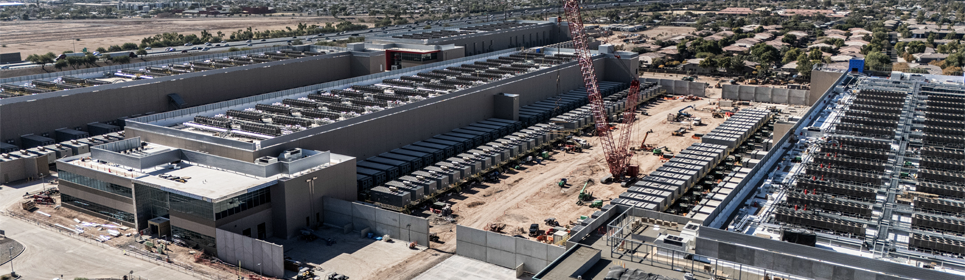
Building all that physical infrastructure is only half the job.
The bigger challenge is managing the bidding, scheduling and financial risk that come with a project this size and speed.
Unprecedented Equipment Lead Times
Transformers, generators and switchgear that used to ship in a few months now take a year or more in many markets. That timeline reshapes procurement planning.
For example, JLL’s 2026 Global Data Center Outlook reports that average U.S. data-center equipment lead time is about 42 weeks, with individual equipment categories and regions stretching longer; 57% of projects experienced a delay of at least three months in 2025.
Contractors have to commit capital to equipment long before it shows up as progress in the field. That puts pressure on cash flow as well as job costing, especially when a contractor has already committed to major equipment purchases but cannot bill for corresponding progress in the field. That gap makes it easy for job costing and WIP (work-in-progress) numbers to drift out of sync if you don’t track committed costs alongside actual costs.
Specialized Trade Labor Compliance
Although not every data center project is government-funded, on the ones that are — projects tied to public funding, government contracts or certain utility work — certified payroll and Davis-Bacon Act compliance kick in.
Davis-Bacon requires contractors on public construction contracts to pay laborers and mechanics prevailing wages set by the Department of Labor for that locality. When it applies, payroll errors carry penalties that come straight out of your bottom line.
Additionally, on a hyperscale campus, it’s common to pull crews from multiple states just to hit the schedule — which means multiple wage rates, multiple union agreements and multiple sets of certified payroll rules running on the same project at the same time.
And multi-rate, multi-state, multi-union payroll gets difficult to track accurately with a spreadsheet once a job reaches this size.
Catching Change Orders Before They Erode Your Margin
On a data center job, change orders move faster than they do on a typical commercial project because faster moving schedules, equipment substitutions and last-minute design changes are common at this scale.
A change order that isn’t logged and priced against the budget in real time gives margin a chance to quietly slip away. Without a way to catch that in real time, cost creep can go unnoticed until the whole job closes out.
Best Practices for Scaling Operations on Data Center Infrastructure Projects
Scaling data center construction requires consistent workflows for field labor, committed costs, WIP, subcontractors and payroll.
General accounting software wasn’t built for construction — it doesn’t handle job costing by phase, retainage, WIP reporting or certified payroll out of the box. Construction accounting software is built around those needs from the ground up.
A few practices help contractors put that kind of system to work.
Connect Field Time Tracking With WIP Reporting
Field time data feeds the labor costs that influence job costing and WIP reporting. A gap between field time tracking and accounting can mean inaccuracies in percent-complete calculations.
Mobile time tracking apps that feed straight into your accounting software close that gap. They give project managers a current view of where each phase stands, without waiting on paperwork to catch up.
Accurate WIP reporting carries extra weight on data center jobs. Bonding companies and lenders often watch these numbers closely on large-dollar projects like these.
Standardize Subcontractor and Supplier Approval Workflows
Scaling up means working with more subcontractors and suppliers across more states. And an inconsistent approval process opens the door to compliance gaps and payment disputes.
A standardized workflow for onboarding, insurance verification and pay applications keeps every project moving at the same pace — no matter how many jobs you’re running at once.
That same process gives your accounting team a repeatable system for compliance tracking — one that matters even more once certified payroll and multi-state labor rules enter the picture.
Centralize Job Costing and WIP Data in One System
Every practice above — field-to-office time tracking, standardized subcontractor workflows — eventually runs through the same back office.
Construction accounting software built for job costing, WIP reporting and multi-state, multi-union payroll gives your team one system to manage all of it — instead of stitching together spreadsheets, timecards and payroll reports from different sources.
That system catches change orders against the budget in real time, so cost creep doesn’t wait until the job closes out to show up.
Keep Payroll and Compliance in the Same System
Multi-state, multi-union payroll is one of the hardest parts of a data center job to get right by hand. Rules shift by state and by union, and a mistake here can hold up a draw or trigger a compliance issue.
Software that handles certified payroll and union reporting automatically — in the same system as your job costing — means payroll compliance doesn’t become its own separate fire to put out.
That matters most on the jobs where the numbers are hardest to keep straight:
- Long equipment lead times tying up capital
- Change orders moving fast
- Payroll rules that shift by state and union
On a data center job, that’s not the exception — it’s the norm.

Get Your Data Center Infrastructure Projects Under Control
Data center infrastructure work rewards contractors who plan tightly and track everything.
Equipment lead times call for proactive cost tracking. Change orders call for budget updates in real time. Multi-state labor calls for a payroll process built for complexity, not spreadsheets.
FOUNDATION® construction accounting software is built for exactly this kind of job.
It gives contractors:
- Detailed job costing
- Up-to-date WIP reporting
- Payroll that handles union rules, certified payroll and multi-state/ multi-rate work
Your team gets all of this without the manual reconciliation that can slow things down.
Share Article
Keep on current news in the construction industry. Subscribe to free eNews!
Related Articles

Estimated, Committed and Actual Costs: What Construction Job Costing Is Really Tracking

Why Do Banks and Bonding Companies Require WIP Reports From Contractors?
Our Top 3 YouTube Videos
Learn about our software more in depth with product overviews, demos, and much more!
Our ACA reporting & e-filing services include official 1094-C and 1095-C IRS reporting, optional e-filing (no applying for a TCC code required), mailing to your employees and experienced support to help you.

There are plenty of reasons to make FOUNDATION your choice for job cost accounting and construction management software — just ask our clients!
From job cost accounting software, to construction-specific payroll. Get an overview on your next all-in-one back-office solution.