
Construction Job Costing Software
The FOUNDATION® Job Costing Module helps you track actual costs and job progress in real time, comparing them against estimates and past performance. With customizable details, you can gain deep insights into your profit margins, identify cost overruns and make informed decisions to keep your projects on budget.
Construction Job Costing Software Features
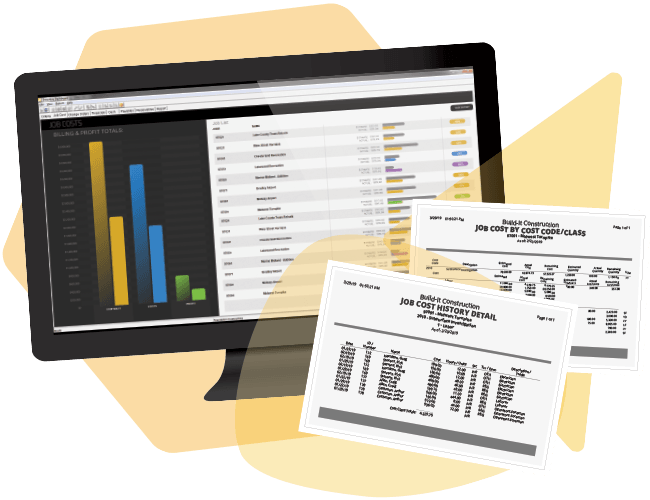
Project Budget Software
Build easy job budgets with your company’s own job cost structure, and compare project performance against estimated revenue, costs, labor hours and quantities.
- Import from spreadsheets or your favorite construction estimating software.
- Copy and modify job cost budgets from past and current projects.
- Easily break budgets down into custom cost codes or standard CSI divisions.
Robust Job Cost Tracking, Cost Management & Reporting
Know exactly where every dollar, hour and quantity goes on your jobs with Microsoft® SQL Server®-powered reporting for stress-free job costing across any date range.
- Review project cash flows, overhead allocation, and over/under billing or work-in-progress (WIP) reports.
- Instantly generate job histories, production reports, estimated vs. actual and more.
- Receive automated alerts to avoid cost or labor overruns.


Construction Change Order Management
Track and report change orders by status, and instantly update budget detail on approval — without altering the original contract amount or budget.
- Use simple change order entry, or print or email custom change order templates.
- Toggle reports to quickly see the effect of pending, internal and estimated change orders.
- Convert RFCs from the Project Management Module into change orders.
Does Your Job Costing Stack Up?
Real-Time Visibility
True or False:
I can see accurate job costs while the job is still in progress — not weeks later.

Field Tracking
How do you capture field production and job progress — so production issues show up before payroll runs?

Payroll & Job Costing Connection
True or False:
Labor data is validated before payroll runs and flows directly into job costs.

Cost Tracking & Overrun Prevention
How do you capture field production and job progress — so production issues show up before payroll runs?

Reporting Confidence for Future Bids
True or False:
I trust our job cost reports are accurate enough to use when bidding future work.

Your Job Costing Health Results:
Take the First Step to Better Job Costing
Preview FOUNDATION’s Job Cost Reporting
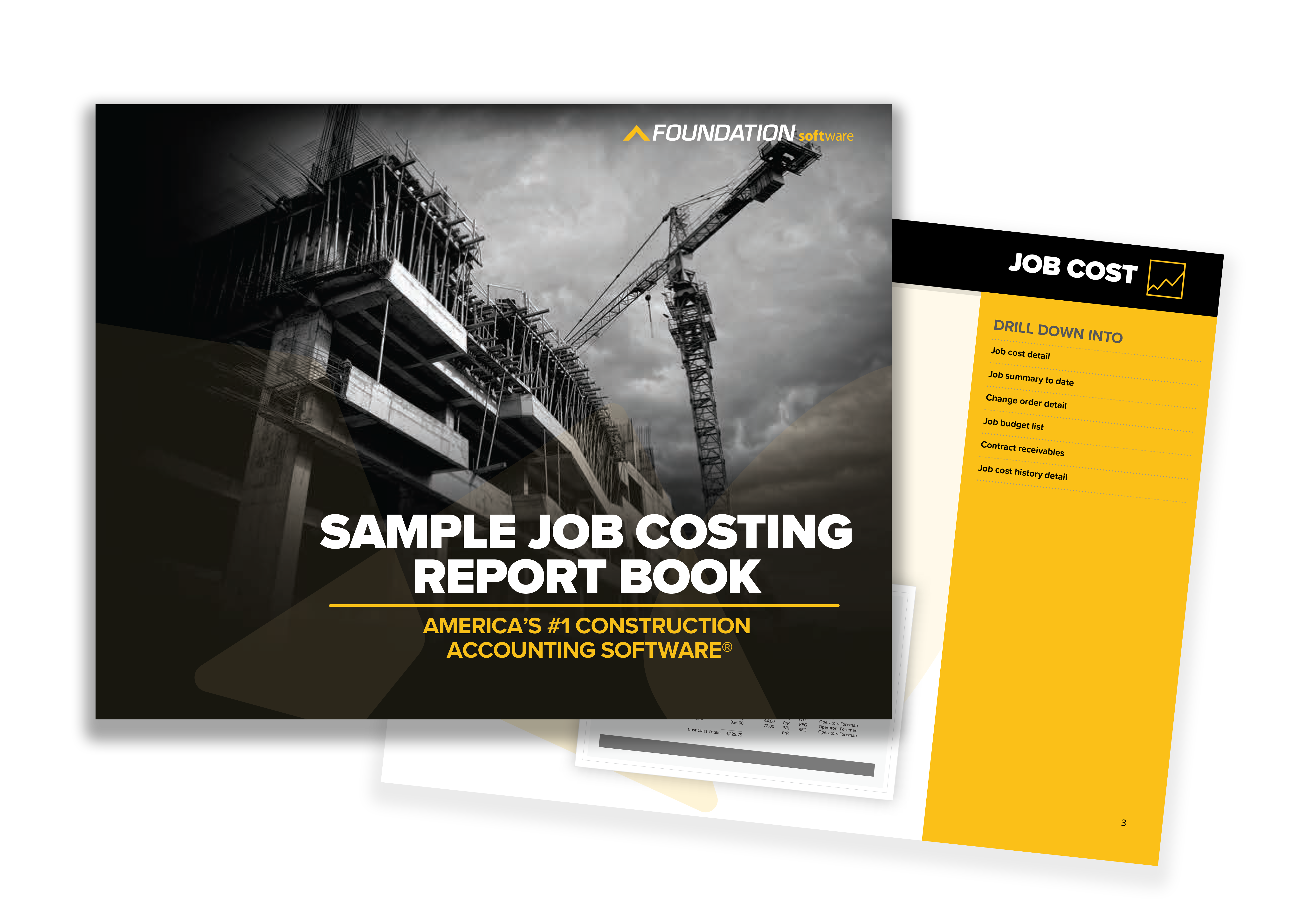
Proper job costing is crucial to keeping your projects on budget and on schedule. Understanding specific strategies like how to adjust a job cost structure and how to monitor cash flow are some of the factors that can help you refine your job costing to exactly match your needs.
We covered these topics, and others, in-depth in our Job Cost Report Book, where you’ll learn about:
- Drilling down into job costing details
- Taking full advantage of dashboard reports
- Leveraging job analysis reports
Other Modules to Help You Work
Strengthen your team’s efficiency with America’s #1 construction accounting software. Our software modules are designed to simplify key tasks — from job costing and inventory management to scheduling and billing.
DataGenie™ Construction Report Designer
Simply drag and drop to modify or create flexible job cost reporting the way you want to see it. Reports can be as basic or as detailed as you choose.
Construction Document Imaging Software
Gain a quick, high-level overview of your projects with graphical reports, and instantly drill down for increasing detail — all the way to individual transactions and invoice images.
Mobile Time Tracking
Enjoy accurate time and labor information for any size crew with live field data accessible from any device.


We plan better. It allows more of the data to be captured, and it’s easy to go back and research something in the past very quickly.
Kirsten Harwood – Office Manager
Subsurface Construction Company, LLC
Job Costing Software FAQs
Foundation Software Case Studies
Explore detailed success stories that demonstrate how FOUNDATION helps construction businesses overcome challenges, increase efficiency and boost profitability.


See How FOUNDATION Can Improve Job Costing
Take control of your job costs and track progress in real time. Schedule a personalized demo of our Job Costing Module to discover how FOUNDATION can help you identify cost savings, improve accuracy and increase profit margins.