
What Profit Margin Should Construction Companies Aim For?


“Profit margin” is one of the most confusing topics in construction. And it’s easy to see why.
You’re running jobs, managing crews and juggling payments. Stopping to dig into your margins can feel like something for a future to-do list — until a busy stretch ends and the bank account tells a different story.
You might be wondering if your pricing is off. Maybe your overhead is too high. Maybe you’re just not charging enough — but you’re afraid to raise prices and lose work to a competitor who’ll underbid you.
And underneath all of it is the same question: What should I actually be making on a job?
There isn’t one number that works for every contractor or every job — but there are benchmarks worth knowing. Understanding them gives you something concrete to measure yourself against.
For most contractors, a healthy net profit margin lands somewhere between 8% and 12% — but getting there starts with understanding what you’re actually measuring.
Key Takeaways
- The industry average net profit margin for construction companies sits between 5% and 8%, but a healthy long-term target for most contractors is 8–12%
- Gross profit and net profit are not the same — confusing them leads to underpricing and cash flow problems
- Profit margins vary significantly by sector, with specialty trades and residential construction typically outperforming commercial and industrial work
- Labor cost increases, scope creep and estimating errors are the most common reasons margins disappear before a job is complete
What Is a Profit Margin in Construction?
A profit margin is the percentage of revenue left over after costs are paid. It’s how construction businesses measure whether a job — or the business overall — is actually making money.
The concept sounds simple enough. So why does it cause so much confusion in the industry?
For one, there’s more than one type:
- Gross margin
- Net margin
- Operating margin
Each type tells a different story, and these terms are oftentimes approached interchangeably when they mean very different things.

Gross Margin vs. Net Margin vs. Operating Margin: What’s the Difference?
Gross margin, net margin and operating margin each measure profitability differently — and mixing them up is one of the most common reasons contractors misprice jobs.
Here’s what each one actually measures:
- Gross profit equals revenue minus direct job costs, expressed as a percentage of revenue.
- Net profit is what’s left after everything is paid — including overhead like insurance, software, marketing and non-field salaries
- Operating margin is what’s left after direct job costs and operating expenses (like rent, utilities and administrative costs) — but before interest and taxes. It shows how efficiently your core business is running, separate from financing decisions
How the Three Margins Work on a Real Job
Say you land a $200,000 remodel.
Your direct costs — labor, materials, subs and equipment — come to $160,000. That leaves a gross profit of $40,000, or a 20% gross margin.
Once you factor in $24,000 in operating expenses like rent, utilities and admin costs, your operating profit drops to $16,000 — an 8% operating margin. This tells you how efficiently the business is running before debt payments or taxes enter the picture.
After accounting for interest and taxes — say another $6,000 combined — your net profit is $10,000, or a 5% net margin. That’s what you actually kept.
Many contractors focus on improving net profit, since that’s the number that reflects whether your business is truly sustainable after every cost is accounted for.
But gross margin is worth tracking job by job; it’s the earliest signal that a project’s pricing is off before overhead makes the problem worse.
Why Your Revenue and Your Bank Account Tell Different Stories

Markup and margin are not the same number — and for contractors, confusing the two is one of the fastest ways to underprice a job.
A strong quarter on paper can still feel financially tight — and if it does, the gap between what you billed and what you kept is usually where the answer lives.
Many contractors price jobs by adding a markup — say 20% — on top of direct costs like labor, materials and subcontractors. That markup is intended to cover overhead and leave a profit.
If overhead runs 18% of revenue, a 20% markup leaves you with just 2% net — and that’s before anything gets delayed on the job. One cost overrun, one slow-paying client, and that margin is gone.
Contractors who don’t fully account for overhead when setting their markup often find that the profit built into the estimate has already been spent by the time the final invoice goes out.
Understanding how margins work is the starting point for pricing jobs correctly and building a business that can sustain itself over time.
Tracking gross margin at the job level gives you an early read on pricing.
However, the number that tells you whether the business itself is healthy — and the one most industry benchmarks are built around — is net margin.
Here’s how those net numbers break down across the industry.
What Are the Actual Net Margin Benchmarks by Sector?
Net profit margins vary significantly across construction sectors, according to the Construction Financial Management Association’s 2024 Financial Benchmarker.
The study found the construction industry averaged a pre-tax net income of 6.3% of revenue in 2023, up from 5.0% in 2022.
But that average hides a lot of variation across sectors:
- Specialty trades (electrical, plumbing, HVAC): ~6.9% average net margin
- Heavy highway and infrastructure: ~7.2% average net margin
- Industrial and commercial: ~4.1% average net margin
- Residential: Net margins reached 8.7% in 2023, though 2024–2025 has introduced new pricing pressure
Most financial advisors and experienced contractors suggest targeting a net margin of 8–15% as a healthy long-term goal.
For most small-to-mid-size contractors, a 10% net margin is a realistic, sustainable goal. It’s enough to fund growth, absorb a bad job and avoid the constant cash flow scramble that keeps many businesses stuck.
What’s Eating Into Your Net Margins?
Even well-priced jobs can finish with thinner margins than expected — and the causes are usually the same ones. Some common reasons include:
- Labor cost creep: Rising labor costs are the leading cause of margin erosion for construction contractors. Field craft wages have increased approximately 4% year-over-year, averaging around $36/hour. Every dollar of wage growth not reflected in your bid pricing comes directly out of your margin
- Scope creep: Jobs expand beyond what was estimated, but the change order never makes it into a documented change order
- Estimating errors: Underbidding materials or underestimating labor hours
- Material price volatility: Increasing material costs come directly out of your margin
- Regulatory and compliance changes: Adds unexpected costs to jobs that were bid before those changes took effect
The contractors who consistently hit strong margins aren’t necessarily charging the most. They’re the ones who know their numbers and have efficient processes for estimating, managing and tracking every job they take on.
They also stay flexible mid-job — documenting and billing change orders promptly instead of absorbing extra work, and adjusting their materials sourcing when prices shift rather than letting cost overruns quietly eat into the margin they bid.
How to Improve Your Profit Margin
Knowing your target is one thing. Hitting it consistently is another. A few areas that make the biggest difference:
- Accurate estimating: Every job should include a detailed cost breakdown and a buffer for material price volatility
- Track actuals vs. estimates: If you’re not comparing projected costs to real costs after each job, you’ll keep repeating the same mistakes
- Manage overhead tightly: Know what your fixed costs are as a percentage of revenue, and price accordingly
- Stay flexible mid-project: Not every margin problem starts at the estimate — some happen in the field
Document and price change orders as they occur rather than absorbing extra scope. Revisit your materials sourcing when costs shift; an alternative supplier or approved substitution can protect margin before a cost overrun becomes unrecoverable.
Real-time job cost tracking makes it possible to spot the problem early enough to do something about it.

Take Control of Your Profit Margin With FOUNDATION®
Knowing your target margin is step one. Hitting it consistently requires real-time visibility into where every dollar is going — before it’s too late to course-correct.
FOUNDATION is construction accounting software built specifically for contractors — and it’s designed around the margin challenges this article describes.
It connects field data to the back office in real-time, tracks job costs as work progresses and shows you — at the job level and across the business — whether you’re trending toward or away from your margin target before the job is invoiced.
That means you can catch labor overruns early, respond to scope creep with a documented change order, and compare actuals to estimates while there’s still time to act.
If you’re ready to stop finding out where margin went after the fact, talk to one of our experts and book a demo.
Share Article
Keep on current news in the construction industry. Subscribe to free eNews!
Related Articles

How Colvico’s AP Manager Handles 200+ Invoices a Week on Her Own
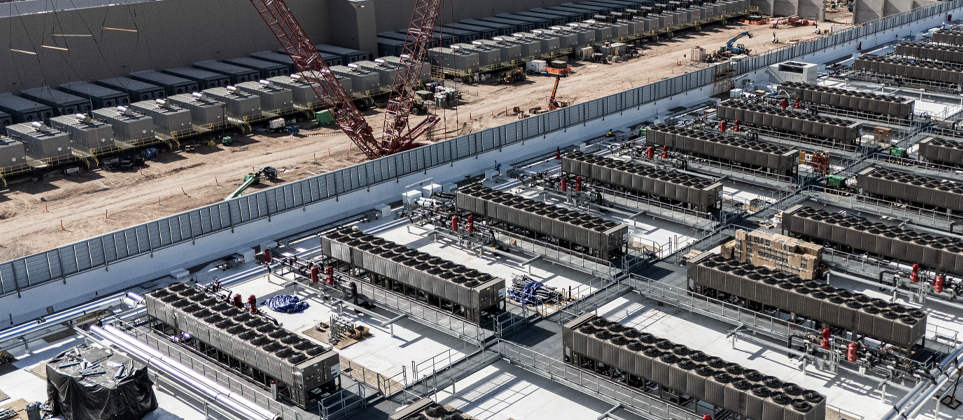
Behind the Construction Data Center Boom: Rising Labor Costs
Our Top 3 YouTube Videos
Learn about our software more in depth with product overviews, demos, and much more!

Our ACA reporting & e-filing services include official 1094-C and 1095-C IRS reporting, optional e-filing (no applying for a TCC code required), mailing to your employees and experienced support to help you.

There are plenty of reasons to make FOUNDATION your choice for job cost accounting and construction management software — just ask our clients!
From job cost accounting software, to construction-specific payroll. Get an overview on your next all-in-one back-office solution.