WIP Reports are Your Secret Weapon for Construction Cash Flow Management


WIP reports are the backbone of successful construction finance. They give contractors the power to track project progress, forecast cash flow and keep lenders happy.
And it’s not just a “nice-to-have.” About 85% of construction projects run over budget by an average of roughly 28% and 70% encounter claims or disputes during their lifecycle, highlighting how often costs and performance drift from plan — and why real-time financial visibility matters.
So, if you’re like most contractors, you’re not alone in asking:
- “How do I know if my projects are on track?”
- “Will I have enough cash flow to cover upcoming expenses?”
These are the questions that have to be addressed in order for jobs to be successful, and WIP reports hold the answers.
Key Takeaways About Work-in-Progress Reports
- WIP reports show the financial position of each construction project by comparing earned revenue to incurred costs
- Real-time cost tracking through WIP reports provides early warning signs when jobs go sideways, allowing you to spot issues while there’s still time to fix them
- Accurate cash flow forecasting becomes possible when based on solid WIP data, helping you predict revenue collection and upcoming expenses with confidence
- Four key components make up every solid WIP report: contract value, costs to date, estimated costs to complete and percentage complete
- WIP reports should be treated as ongoing project management tools rather than monthly chores to maximize their effectiveness
- Quality control processes are essential for meaningful financial insights, requiring consistent data collection and regular review by project managers
- WIP reports transform contractors from reactive to proactive management, enabling smart business decisions before small problems become big ones

What Are WIP Reports and Why Every Contractor Needs Them
Work-in-progress reports are financial snapshots that show exactly where your construction projects stand, financially, at any given moment.
Think of them as your project’s vital signs. They tell you if everything’s healthy or if you need to take immediate action.
The Basics: Breaking Down WIP Components
Every solid WIP report contains several key elements that work together to give you the full picture:
- Contract value shows your total project worth
- Costs to date reveal how much you’ve already spent
- Estimated costs to complete help you see what’s still coming down the pipeline
- Percentage complete tells you how far along you really are
Then, when you combine these numbers, you get the entire picture. For example, your gross profit calculation shows whether you’re making money. Meanwhile, your profit margin reveals how efficiently you’re doing the job.
But here’s where many contractors get tripped up. These numbers are only as good as the data going into them.
Common WIP Report Mistakes That Cost You Money
Too many contractors treat project tracking like a monthly chore instead of a daily management necessity. They’ll estimate costs based on gut feelings rather than actual data, or they’ll forget to update their percent complete regularly. Some even ignore change orders until the month-end, which throws off their entire cash flow forecasting.
Another big mistake? Not accounting for job costs that haven’t hit your books yet. That concrete delivery scheduled for next week needs to be in your projections, even if you haven’t been invoiced yet.
How WIP Reports Reshape Your Cash Flow Forecasting

Cash flow forecasting becomes incredibly powerful when you base it on solid WIP data.
Forecasting involves analyzing current project data and trends to predict future cash flow patterns, helping you anticipate both revenue collection and upcoming expenses.
Instead of guessing when money will come in, you can predict it with real accuracy.
Predicting Revenue with Confidence
Your WIP reports show you exactly how much revenue you can bill based on work completed. This takes the guesswork out of revenue forecasting and helps you plan for upcoming expenses.
For example, if you’re 60% done with a $500,000 job, you should be able to bill $300,000 (assuming you’re billing using the percentage-of-completion method). Looking forward, you can forecast when the remaining 40% of work will be completed and when you’ll be able to bill the final $200,000. This predictive capability helps you plan for future cash needs and identify potential gaps.
Contractors use this data to identify potential cash flow gaps before they become problems.
If your WIP shows you’ll complete $200,000 worth of work next month but only collect $150,000, you know you need to either speed up collections or arrange temporary financing.
Managing Project Costs in Real-Time
Cost tracking through WIP reports gives you early warning signs when jobs go sideways. For example, if your actual costs are running 15% higher than estimated and you’re only 40% complete, you’ve got a problem that needs immediate attention.
The best part? You can spot these issues while there’s still time to fix them.
Maybe you need to have a conversation with your subcontractors about productivity. Or, perhaps it’s time to submit that change order you’ve been putting off.
Related: Learn how WIP automation helps contractors.
Building Accurate WIP Reports: A Step-by-Step Process
Creating reliable WIP reports requires consistent, repeatable processes and attention to detail.
The key is building systems that capture information in real-time rather than scrambling to piece things together at month-end.
Setting Up Your Data Collection System
Start by establishing clear procedures for tracking job costs as they happen. Your field supervisors should be reporting daily on things like:
- Labor hours
- Material usage
- Work progress
This real-time data becomes the basis for accurate project tracking.
Don’t forget about indirect costs like equipment rental, insurance and overhead allocation. These often get overlooked but can significantly impact your profit margins if not properly tracked.
Check out our guide to construction cost codes, jobs, phases and cost classes.
Calculating Percent Complete Accurately
Percent complete is where many contractors struggle, but it’s crucial for accurate revenue recognition. You have several methods to choose from:
- Cost-to-cost
- Units of work
- Physical progress
The cost-to-cost method divides costs incurred by total estimated costs. Meanwhile, units of work looks at actual quantities completed.
Physical progress requires more judgment but often gives the most accurate picture for complex jobs. The key is picking one method and sticking with it consistently across all your projects.
Quality Control and Review Processes
Accurate data is the cornerstone of reliable WIP reports, making quality control processes essential for meaningful financial insights.
Establish monthly review processes where project managers validate the numbers before they go to your accountant or CFO. Look for red flags like jobs showing over 100% complete or gross margins that seem too good to be true.

Taking Control of Your Construction Business with Better Financial Management
WIP reports give contractors the financial visibility they need to make smart business decisions and maintain healthy cash flow. When you combine accurate project tracking with solid forecasting, you transform from reactive to proactive management.
Instead of wondering if jobs are profitable, you know exactly where you stand and can make adjustments before small problems become big ones.
FOUNDATION® understands the unique challenges contractors face with construction finance and project management. The software combines job costing, WIP reporting and cash flow management in one powerful platform designed specifically for construction companies.
Whether you’re managing a few projects or hundreds, FOUNDATION construction accounting software gives you the tools and insights you need to stay profitable and grow your business.
Ready to take control of your construction financials? Talk with a FOUNDATION Software expert today to see how our solutions can streamline your WIP reporting and improve your cash flow forecasting.
Share Article
Keep on current news in the construction industry. Subscribe to free eNews!
Related Articles

How Colvico’s AP Manager Handles 200+ Invoices a Week on Her Own
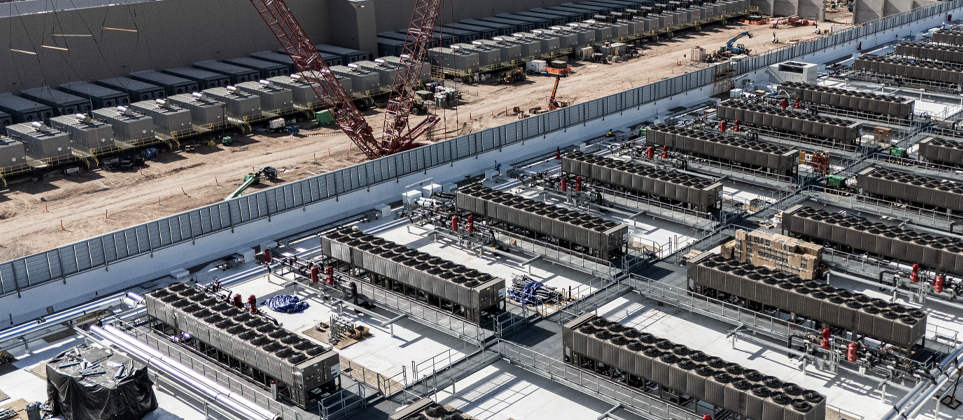
Behind the Construction Data Center Boom: Rising Labor Costs
Our Top 3 YouTube Videos
Learn about our software more in depth with product overviews, demos, and much more!
Our ACA reporting & e-filing services include official 1094-C and 1095-C IRS reporting, optional e-filing (no applying for a TCC code required), mailing to your employees and experienced support to help you.

There are plenty of reasons to make FOUNDATION your choice for job cost accounting and construction management software — just ask our clients!
From job cost accounting software, to construction-specific payroll. Get an overview on your next all-in-one back-office solution.