

Read Time: Less than 7 Mins
First Published: July 1, 2026
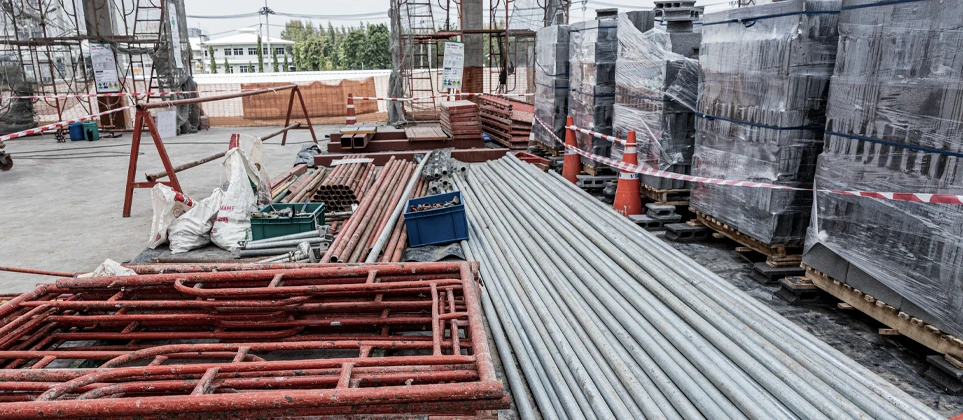
When material prices won’t sit still, job cost control is what keeps a price swing from quietly becoming a margin loss — it tracks actual costs against your estimate in time to act, not after closeout. Keeping job costs in line is already a heavy lift. But when materials like lumber, copper or steel shift mid-project, that timing is the difference between catching a margin problem early and finding out when it’s too late.
You didn’t price the job wrong. The market moved on you. And the real question isn’t whether price swings will happen. It’s whether you’ll catch them early enough to do something about it.
For many contractors, the real pain isn’t that a job goes sideways — it’s that they don’t find out how bad the damage is until closeout, long after there was any chance to course-correct.
Catching it that early is the whole point of managing your construction finances in real time — and job cost control is where that discipline meets the day-to-day reality of moving material prices.
Key Takeaways
- Material price volatility is one of the top threats to project profitability — and it’s largely outside your control
- Catching cost overruns early gives you options; catching them at closeout doesn’t
- Variance tracking, change orders and contract language are your main tools for protecting margin
- Construction-specific accounting software gives you the real-time job cost visibility needed to act before problems compound
- When field data, payroll and billing all feed into one system, your numbers reflect what’s actually happening on the job — not what happened two weeks ago
Why Material Price Swings Are So Hard to Absorb
In a fixed-price or lump-sum contract, the contractor carries the financial risk when material costs go up. That’s standard in the industry, and it’s manageable — until the market becomes genuinely unpredictable.
Today’s volatility — tariffs, supply chain disruptions, fuel surcharges, regional shortages — is faster-moving and harder to anticipate than what most contractors have historically planned around.
For example, when lumber prices surged 200–300% during the pandemic, contractors on multi-month projects had few good options once they were already into the work.
More recently, tariffs on imported steel and aluminum have created similar uncertainty on long-lead projects. The gap between estimated and actual costs can open up quickly.
The problem isn’t always that contractors miss the warning signs. It’s that they can’t always see what those signs mean for a specific job until it’s too late.

The Real Cost of Finding Out Late
Knowing that material prices are up is not the same as knowing what that means for a specific job.
A contractor might follow steel prices daily and still not have a clear picture of how a 12% price increase is affecting margin on an active project.
This is because it’s hard to map the exposure against that job’s actual buy quantities, purchase timing and remaining scope — all measured against the estimate you built the budget on.
That’s where the real gap is. If you’re 60% through a job and you’ve run the numbers, you still have room to respond. You can renegotiate a subcontract, value-engineer a detail or have a direct conversation with the owner about cost conditions.
If you don’t run those numbers until the job closes, the options you had at 60% complete are gone.
Strategies That Protect Your Margin When Prices Move

You can’t control what the market does. But you can control your contracts, your communication and how you respond when costs start shifting.
Build Escalation Clauses Into Your Contracts
A material escalation clause adjusts the contract price when specific material costs exceed a defined threshold from your bid-day price.
These clauses are most common on longer projects and for high-volatility materials like:
- Steel
- Copper
- Lumber
- Petroleum-based products
Price certainty matters to owners, and that’s a reasonable position.
One approach worth considering is a bilateral clause that works in both directions. If material costs rise, the contract price adjusts up. If they fall, it adjusts down.
That kind of structure tends to make the conversation more collaborative, since it reflects real market conditions rather than shifting risk entirely onto one party.
More construction companies have started using this type of language in recent years, particularly on longer-duration projects where exposure is harder to predict at bid time.
Move on Change Orders — and Documentation — Without Delay
When material prices shift and scope is affected, a change order is what lets contractors adjust the contract price to reflect those new conditions.
A change order is a written amendment to the original contract that documents what changed, why it changed and what it costs.
Timing matters. A change order sitting unsigned for three weeks may not get approved before the work is already done — and at that point, your leverage is gone.
Documentation matters just as much. Track the original bid-day price, the escalated cost and purchase date. Having a clear backup is what separates a recoverable change order from a dispute.
Flag Cost Issues Before You Have the Full Picture
Flagging a cost issue early — before you have the full picture — is what keeps margin conversations collaborative instead of confrontational. Waiting for complete information is the common mistake: by then, time and options have both narrowed.
As soon as costs start trending toward the budget threshold, bring it up. Even a rough estimate of the impact gives the owner a heads-up and creates space for a collaborative resolution.
That kind of proactive communication also sets the stage for the next section — because knowing when to raise the flag depends on having current numbers in front of you.
How Software Keeps Project Costs Visible in Real-Time
Managing costs across multiple jobs — each with their own cost codes, phases, subcontractors and billing schedules — is a lot to track manually. Construction-specific accounting software gives contractors real-time job cost reports that compare actual costs against the estimate by phase and cost code.
The challenge isn’t just knowing what’s been spent. It’s knowing where you stand relative to your estimate right now, so you can act on it.
When material costs are running over in a specific area, you see it in the report — not when you’re reconciling invoices at the end of the month.
Work-in-progress (WIP) reports take that a step further. They connect cost data to project progress and show what’s been earned, what’s been billed and what’s projected on every open job.
That visibility matters beyond day-to-day project management.
Accurate WIP reporting is also useful for bonding and lender relationships. Many surety underwriters and lenders look closely at how contractors track and report WIP — one of the core construction financial statements they use to gauge financial discipline.

Take Control of Your Job Costs Before the Market Does
When material prices move, protecting your margin comes down to three things:
- Contracts that account for volatility
- Clear communication when costs shift
- Job cost data you can trust throughout the life of a project
FOUNDATION® is construction accounting software built for contractors who want that kind of control.
It connects payroll, billing, change orders and job cost tracking in one platform — with no manual handoffs between disconnected tools and no waiting on someone in the office to pull a report.
The data is current, the reports are built for how contractors work, and you can drill into any cost code on any job, whenever you need to.
To see what better job cost tracking looks like, talk with an expert and book a demo.
Share Article
Make Your Inbox Smarter
Keep on current news in the construction industry. Subscribe to free eNews!
Related Articles

Why Do Banks and Bonding Companies Require WIP Reports From Contractors?
Picture this: You’ve got a great track record, five solid jobs under your belt this year and a new project
Learn More

Building Data Center Infrastructure: What Trade Contractors Need to Know
Data center infrastructure projects create unique financial and operational challenges for trade contractors because of their scale, speed and technical
Learn More
Our Top 3 YouTube Videos
Learn about our software more in depth with product overviews, demos, and much more!
ACA & W-2 Services
Our ACA reporting & e-filing services include official 1094-C and 1095-C IRS reporting, optional e-filing (no applying for a TCC code required), mailing to your employees and experienced support to help you.

Client Testimonials
There are plenty of reasons to make FOUNDATION your choice for job cost accounting and construction management software — just ask our clients!
Product Overviews
From job cost accounting software, to construction-specific payroll. Get an overview on your next all-in-one back-office solution.